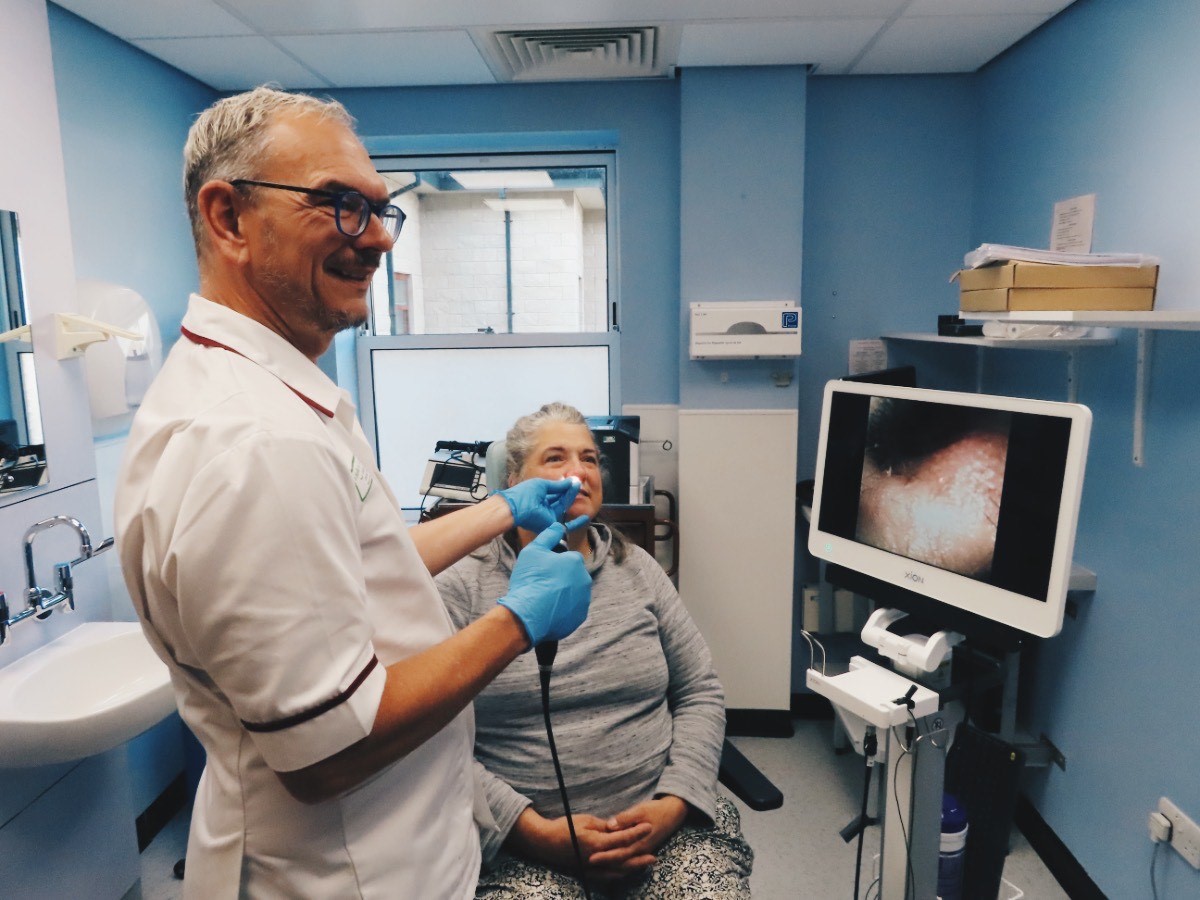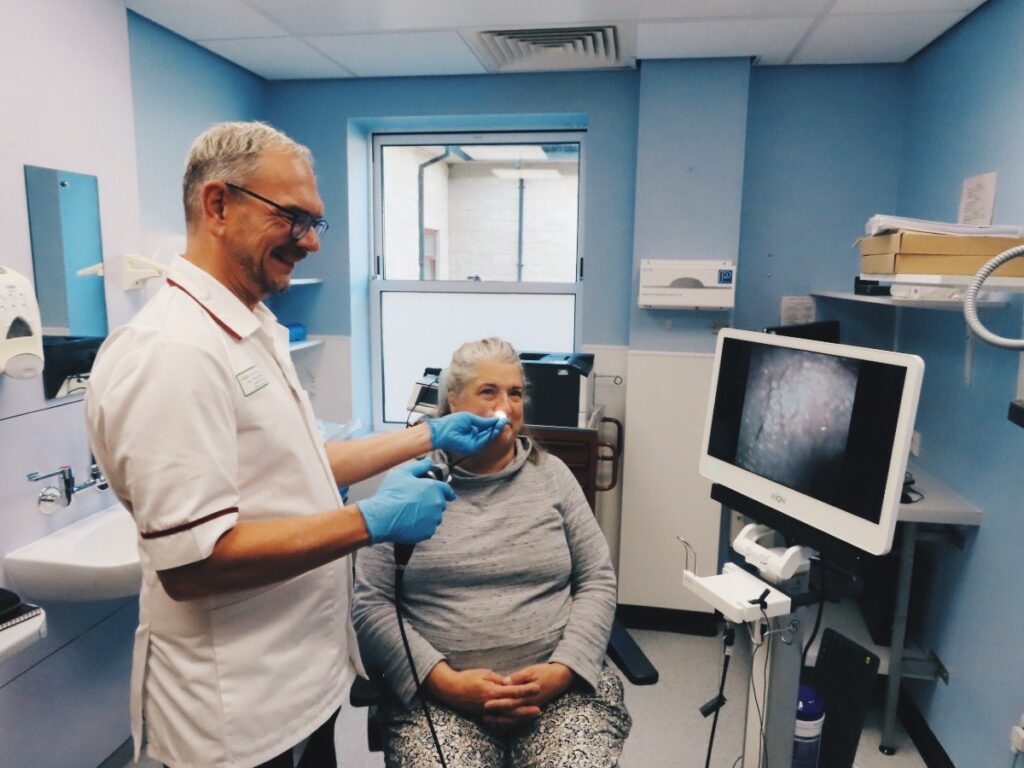
Fibreoptic endoscopic evaluation of Swallowing (FEES) allows clinicians to safely assess a patient’s ability to swallow. This can be adversely affected by, for example, a stroke. A tube with a tiny light on the end is inserted behind the patient’s nose, lighting up the throat area and allowing video of it to be relayed to a screen.
‘Otherwise you don’t quite know for certain if somebody is coughing and choking,’ says Duncan Brown, ‘when you do the assessment this way it gives you a much clearer image of what’s going on with somebody’s swallow because you can see when liquids or food residue lodges in the throat or goes the wrong way.
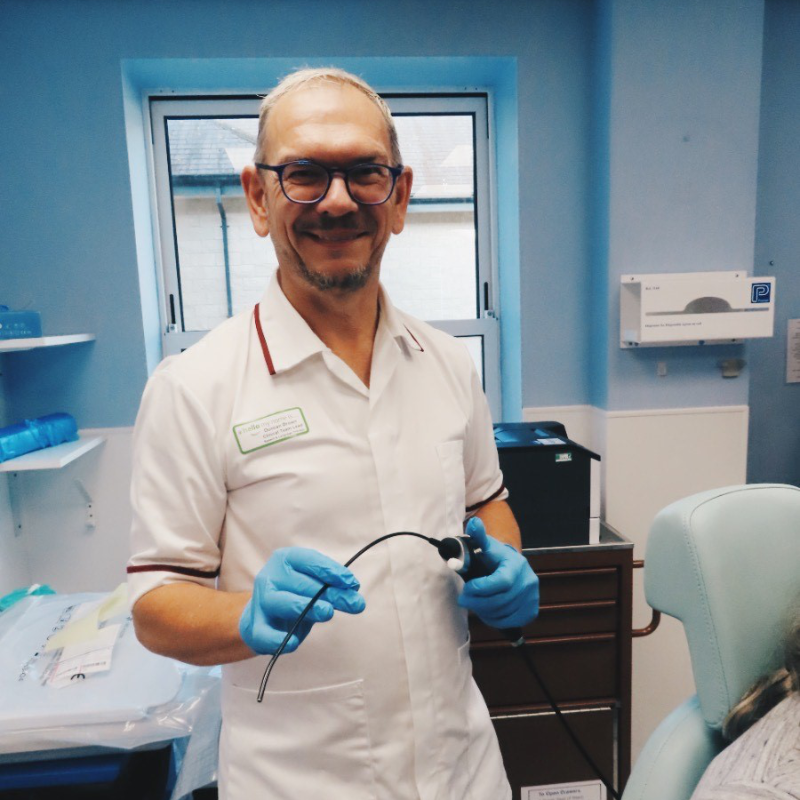
‘It’s something that we didn’t have here in the hospital. It was a service that I wanted to develop but there weren’t any funds for it so we were fortunate enough to put a bid in to the Henry Bloom Noble Healthcare Trust, and have it accepted.
‘We’ve been using it with great success in the hospital setting, on Intensive Care and on the Stroke Wards, to see people at their early stages. Where they’ve had any swallowing difficulties, it’s started to help with our decisions to help people eat and drink again safely.
‘For patients who have had a tracheostomy it’s invaluable as they begin to become more alert and start to eat and drink again also for patients who have had a new stroke. We can assess them with some certainty and understand what we can and can’t give them and so reduce the risk of chest infections.

‘We can also play the video back to patients so that they can watch it too. Seeing their ‘swallow’ on screen can help them to understand what is going on inside them and guide them to making more helpful choices when it comes to eating and drinking.
‘We’ve been using it on a regular basis and it really has made a big difference,’ says Duncan.
Currently Duncan is the only member of his team who is trained to use the video Naso-pharyngoscope but he plans to train his colleagues over the next year or two.
He says: ‘It’s equipment that makes such a difference in training and developing people’s skills.’
And, as he points out, this is also equipment which has made a real impact on an element of patient care which needs to be done here on the island.
He says: ‘You have to have specialist investigation on site, you can’t send them away to have it.
‘We’re now trying our very best to offer a gold standard of care here.’
‘So this has been a game changer really and we are so, so appreciative.’